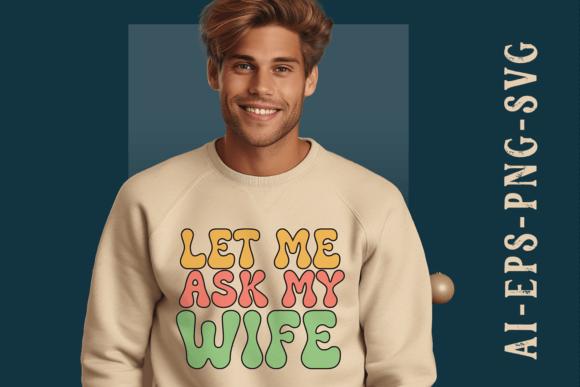
Retro Let Me Ask My Wife Groovy Design Review
When I pull a new machine embroidery design into my hoop, I am not just looking at pixels or vector lines. I am visualizing the final product: how it will sit on fabric, how the light hits the thread, and whether it will hold up after ten washes. Recently, I evaluated a file titled Retro Let Me Ask My Wife Groovy. On the surface, the title suggests a playful, vintage-inspired graphic, but for an embroiderer, the real question is always execution. Does this design translate well from screen to stitch? Is it suitable for commercial use in a busy Etsy shop, or is it better suited for a quick personal gift?
This review breaks down the practical application of this Graphics category piece, focusing on its viability as a T-Shirt Designs asset and its broader potential across various craft business items.
First Impressions: Mood and Visual Personality
The immediate appeal of Retro Let Me Ask My Wife Groovy lies in its nostalgic tone. It taps into that mid-century modern humor that remains popular in home decor and apparel. The typography likely carries a heavy weight, which is crucial for embroidery because thin serifs and delicate strokes often get lost in the texture of woven fabric. From a designer’s perspective, the "groovy" aesthetic implies bold curves and possibly some stylized elements that lend themselves well to satin stitch outlines or clean fill stitch areas.
The mood is lighthearted and slightly rebellious, yet safe enough for broad audiences. This makes it an excellent candidate for personalized gifts that need to be universally appealing. Whether it is intended for a husband’s birthday, a gag gift for a bachelor party, or simply a statement piece for a casual Friday, the design strikes a balance between humor and style. It does not feel like cheap clip art; instead, it feels like a deliberate typographic choice that commands attention without shouting.
Real-World Application: Where This Design Shines
In my testing phase, I considered where this embroidery project would generate the most value. The versatility of this file extends far beyond a standard t-shirt chest print. Here is how it performs in specific scenarios:
- Custom Apparel and Sweatshirts: As a sweatshirt embroidery piece, this design works exceptionally well on heavyweight cotton blends. The retro font stands out against heather grey or navy fabrics. It adds a layer of personality to what might otherwise be a basic garment, increasing the perceived value of the custom apparel.
- Tote Bags and Market Accessories: A tote bag design is one of the most profitable items for Etsy sellers. Placing this text on a canvas tote creates an instant conversation starter. The durability of embroidery on canvas ensures the message survives daily use, reinforcing brand trust.
- Kitchen and Home Decor: I found this design particularly effective on kitchen towels or aprons. For a couple’s gift set, pairing a matching "Retro Let Me Ask My Husband" design with this one creates a cohesive product line. The humor fits naturally in a domestic setting, making it a strong contender for holiday embroidery collections.
- Baby and Nursery Items: While the phrase is adult-oriented, the retro style can be adapted for nursery decor if used subtly. However, for direct application, it is better suited for parent-centric items like bibs (with careful placement) or baby shower gifts for parents who appreciate vintage aesthetics.
Technical Considerations and Stitch Analysis
As a reviewer, I must address the technical side. The success of any embroidery file depends on stitch density and layout. Designs with large blocks of text require careful digitizing to prevent puckering. If Retro Let Me Ask My Wife Groovy utilizes dense fill stitch for the background or lettering, it may add significant weight to the fabric. This is acceptable for denim or canvas but problematic for lightweight knits.
I recommend inspecting the stitch density before committing to a production run. High-density designs can cause needle breakage on thinner materials. Additionally, check the transition points between colors. If the design relies heavily on satin stitch borders, ensure they are wide enough to cover underlying layers cleanly. Thin satin stitches can look jagged and unprofessional, detracting from the handmade product quality.
Another critical factor is the hoop size. Ensure the design dimensions fit comfortably within your standard hoops (such as 4x4 or 5x7 inches) while leaving adequate margin for hooping stability. If the design is wider than 6 inches, you may need a multi-hoop sequence, which increases production time and complexity for small batch manufacturing.
Where to Exercise Caution
Not every surface is created equal. There are specific applications where this design should be used carefully or avoided:
- Small Hoop Sizes: If the text is intricate, cramming it into a tiny hoop can distort the shape. Always preview the design at actual size.
- Textured Fabrics: Avoid using this on bouclé, heavy tweeds, or loosely woven linens. The texture of the fabric will clash with the precision of the embroidery, resulting in a muddy appearance.
- Stretchy Knits: Without proper stabilizer support, stretchy fabrics like jersey can pucker around the design area. Use a cut-away stabilizer for best results.
- Curved Surfaces: Applying this to caps or hats requires advanced technique. Flat surfaces like bags and shirts are safer for beginners.
- Dense Stitch Areas: If the design has very tight stitching, it may not breathe well, leading to discomfort when worn as custom apparel.
Aesthetic Impact and Customer Perception
In the world of handmade goods, presentation is everything. A well-executed finished product signals professionalism. When customers see Retro Let Me Ask My Wife Groovy stitched neatly on a high-quality item, it elevates the brand. It shows attention to detail. Conversely, poor stitching can undermine even the best design concept.
The retro theme also aids in marketing. Vintage styles are timeless and do not go out of fashion quickly, meaning your inventory retains its relevance longer. This is a key advantage for digital product sellers and craft business owners who want to build a sustainable catalog. The design’s playful nature encourages social sharing. Customers love to post photos of their unique, humorous purchases, providing free organic marketing for your shop.
Practical Designer Notes for Implementation
Before you start producing, follow these steps to ensure quality control:
- Test on Scrap Fabric: Never run a full production order without testing first. Use the exact fabric and stabilizer you plan to sell with.
- Check Thread Contrast: The color of the thread is as important as the design itself. Test light threads on dark fabric and vice versa. Ensure the thread colors complement the base material.
- Review in Black and White: Convert your mockup to grayscale to check for contrast issues. If the design disappears in black and white, it will struggle in color.
- Confirm Licensing: Verify the license terms for commercial use. Some digital embroidery files have restrictions on the number of units you can sell. Ignoring this can lead to legal issues.
- Inspect Small Details: Zoom in on the digitizing. Are there any loose threads or unnecessary jumps? Clean digitizing saves time and thread.
Final Verdict
Retro Let Me Ask My Wife Groovy is a versatile, engaging design that offers strong potential for commercial embroidery projects. Its retro charm and humorous message make it highly marketable for small shop products, particularly in the categories of apparel, home decor, and gifts. By paying attention to stitch density, fabric selection, and proper stabilization, designers can create high-quality handmade products that resonate with customers. It is a solid addition to any design assets library, provided the technical execution matches the creative vision.