Polaroid Collections Review
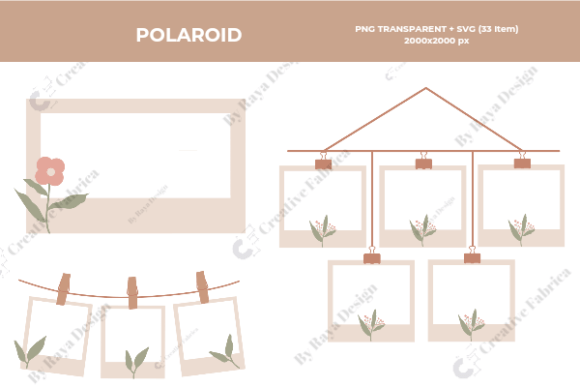
When I sit down to evaluate a new batch of Decorative Elements for my own studio or client work, I am rarely looking for just another clipart set. I am looking for versatility, stitch clarity, and a design that translates well from screen to fabric. Recently, I pulled Polaroid Collections into my workflow to see how it holds up under the scrutiny of real-world application. This pack of 33 items, available in both SVG and transparent PNG formats, promises to be a versatile asset for makers who want to create patterns, backgrounds, stickers, or standalone embroidered features. But does it actually perform when you are running it through an embroidery machine?
The First Impression: Mood and Visual Personality
From a purely aesthetic standpoint, Polaroid Collections taps into a very specific nostalgia that is currently dominating the handmade market. The mood is casual, candid, and instantly recognizable. As a designer, I appreciate that these aren’t overly intricate floral arrangements or complex geometric patterns; they are simple, iconic shapes that rely on negative space and clean lines. This simplicity is actually a strength in embroidery. It suggests that the designs will stitch cleanly without getting lost in thread texture.
The collection feels like a digital scrapbook come to life. The visual personality is friendly and approachable, which makes it ideal for brands that want to project warmth and authenticity. Whether you are designing for a baby boutique, a cozy home goods shop, or a trendy apparel line, the theme fits naturally. It doesn’t feel forced or trendy in a way that will look outdated next month. Instead, it has the timeless quality of a classic photograph frame, which gives it longevity as a design asset.
Real-World Application: From Screen to Stitch
Let’s talk about where this design truly shines. I recently imagined a scenario where I was preparing a custom order for a small business client who sells personalized tote bags and sweatshirts. The client wanted a "memory lane" theme for a summer collection. Polaroid Collections would have been the perfect anchor for this project.
Imagine a large-scale print on the back of a heavyweight cotton sweatshirt, where multiple frames from the collection are arranged in a collage. Or, consider a series of embroidered patches for denim jackets, where each patch features a single, clean frame from the set. Because the folder contains 33 distinct items, you have enough variety to create a cohesive pattern without repeating yourself too often. This is crucial for commercial embroidery projects where consistency and variety are key to keeping customers engaged.
I also see this working exceptionally well for nursery decor. A pillow cover featuring a subtle, all-over pattern of these polaroid frames filled with soft, pastel-colored fill stitches would be a hit at craft fairs. The shapes are simple enough that even beginner embroiderers can achieve a professional finish, reducing the risk of errors and returns for small shop owners. For Etsy sellers, this means lower overhead and higher customer satisfaction.
Technical Considerations and Fabric Compatibility
While the concept is strong, any experienced designer knows that the devil is in the details. When evaluating Polaroid Collections, we must consider how it interacts with different materials. These designs are essentially graphic outlines and fills. If you are using them as a satin stitch border, the corners need to be sharp. If they are used for fill stitch areas, the density needs to be appropriate so the fabric doesn’t pucker.
I strongly advise testing this design on scrap fabric before committing to your final product. Pay close attention to the stitch density. If the original file is too dense, it might feel stiff on a delicate fabric like silk or thin linen. Conversely, if it is too sparse, it might not cover the backing material adequately on darker fabrics. You should also inspect the small details. Are there tiny elements that might get lost in the stitching? In the case of polaroid frames, the inner white space is critical. If the border is too thick, it eats up the photo area. If it is too thin, it might break during the hooping process.
Another factor is the fabric texture. On heavily textured fabrics like chunky knits or bouclé, fine details can disappear. Polaroid Collections works best on smooth, stable fabrics such as cotton twill, canvas, or jersey. If you are planning to use this on stretchy fabrics like spandex blends, ensure you are using the correct stabilizer to prevent distortion. The shape of a polaroid frame is rectangular, which is generally stable, but curved surfaces like caps or sleeves require careful hooping to maintain the integrity of the design.
Color and Contrast Strategy
Thread color choice is paramount. Since these are often black-and-white themed graphics, high contrast is essential. On dark fabrics, a white or light gray outline will pop beautifully, creating a crisp, modern look. On light fabrics, a black or navy outline provides definition. However, avoid low-contrast combinations, such as light gray thread on white fabric, as the design will wash out completely after washing. Always test your thread colors against your chosen fabric under natural lighting conditions.
Licensing and Commercial Use
For those of us selling finished products, licensing is non-negotiable. The description mentions that the folder contains SVG and PNG files, which are typically vector and raster formats. While these are excellent for digital printing or cutting vinyl, they are not inherently embroidery files unless converted. If you are converting these SVGs into machine embroidery design formats (like .dst or .pes), you must ensure that the license allows for commercial use of the final stitched product. Some licenses permit you to sell physical items made from the design but prohibit the sale of the digital file itself. Always read the fine print. If the terms are unclear, contact the creator directly. This protects your brand and avoids potential legal issues down the line.
Final Verdict: Is It Worth Your Time?
Polaroid Collections is a solid addition to any designer’s library, particularly for those focused on lifestyle, parenting, or vintage-inspired aesthetics. Its strength lies in its simplicity and adaptability. It is not a complex, technical challenge, but rather a reliable tool that delivers consistent results. It is perfect for personalized gifts, custom apparel, and handmade product lines that need a touch of nostalgic charm.
However, success depends on execution. Test your hoop size, choose your stabilizer wisely, and pay attention to thread contrast. By doing so, you can transform these simple graphic elements into high-value, professional-looking embroidered pieces that customers will love. For the right maker, with the right technique, this collection offers great value and creative potential.