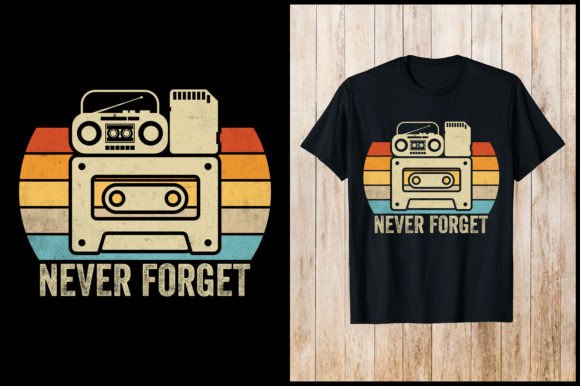
Never Forget Mixtape Music 80s T-Shirt
As a designer who spends half my life staring at digitized files and the other half troubleshooting tension issues on an embroidery machine, I have developed a keen eye for what actually works in production. We are often sold on the promise of "instant profit" or "viral potential," but when it comes to machine embroidery design, the reality is usually much more nuanced. Today, I am putting the Never Forget Mixtape Music 80s T-Shirt under the microscope. This isn't just about whether it looks cool on a screen; it is about how it behaves when threaded through your needle, stitched onto fabric, and eventually handed over to a customer.
The premise here is straightforward: a retro-themed graphic celebrating the golden era of mixtapes and cassette culture. For those of us in the craft business, nostalgia is a powerful currency. But does this specific embroidery file translate that sentiment into stitchable art, or does it fall apart when you zoom in? Let’s break down the practical realities of using this design for real-world projects.
First Impressions and Visual Personality
When you first load the Never Forget Mixtape Music 80s T-Shirt into your digitizing software, the immediate takeaway is its bold, graphic nature. The aesthetic leans heavily into the vibrant, chaotic energy of the late '80s and early '90s. It screams "retro cool." Visually, it creates a mood that is both playful and slightly edgy, which makes it highly suitable for a specific demographic: Gen Z enthusiasts discovering vintage aesthetics, Millennials craving nostalgia, and anyone who appreciates analog music history.
From a layout perspective, the design feels balanced enough for standard placements like the left chest or a large center-back print. However, as with any Graphics asset intended for stitching, we must look past the digital rendering. The shapes appear distinct, which is a good sign. Complex gradients or overly subtle shading are the enemies of clear embroidery. If this design relies on solid blocks of color or high-contrast lines, it has a much higher chance of surviving the stitching process without looking muddy or losing definition.
Real-World Application: Where Does It Shine?
I recently had a scenario where a client wanted a personalized gift for a music teacher who loved vintage audio equipment. We were debating between a simple text quote and a graphic element. That is when I considered the Never Forget Mixtape Music 80s T-Shirt. Here is how I see this design performing in actual product scenarios:
- Sweatshirt Embroidery: This is perhaps the strongest use case. Heavy cotton fleece provides a stable base that can handle moderate stitch density. A retro cassette graphic on a heather grey or black sweatshirt is a classic combination. The design’s likely bold outlines will pop beautifully against the textured fabric.
- Tote Bag Design: Canvas totes are a staple for Etsy sellers. Using this as a tote bag design allows for a larger format, giving the details room to breathe. However, one must be careful with thread pull on loose-weave canvas.
- Embroidered Patch: Converting this into a detachable patch is a smart move. It allows customers to apply it to denim jackets, backpacks, or hats themselves. This adds value and versatility to the handmade product.
- Baby Embroidery: While less obvious, a smaller version could work on a muslin blanket or a onesie for a baby shower gift. The theme is neutral enough (music/retro) to appeal to parents who want something unique beyond standard animals or stars.
In these contexts, the design enhances product value. It signals that the seller understands current trends while tapping into timeless nostalgia. It builds customer trust because it shows attention to thematic detail, rather than just slapping on generic clipart.
Technical Challenges and Areas of Caution
Not every digital file translates seamlessly to thread. There are several areas where the Never Forget Mixtape Music 80s T-Shirt requires careful handling. As a professional reviewer, I urge you to consider these friction points before mass-producing:
- Hoop Size Constraints: If the design includes intricate details within a small area, you might run into issues with smaller hoops. Fine lines can merge together if the stitch density is too high. Always check the bounding box dimensions.
- Fabric Texture Compatibility: This design may struggle on highly textured fabrics like chunky knits or terry cloth. The uneven surface can cause puckering or distortion, especially if the design uses long runs of satin stitch. Stick to smooth wovens or tightly knit jerseys for best results.
- Thread Color Contrast: Retro designs often rely on specific color palettes. If you are embroidering on dark fabric, ensure your thread choices provide enough contrast. A pastel yellow on navy blue might get lost. Test your thread colors against your actual garment fabric.
- Dense Stitch Areas: If the design features large fill stitches, be wary of fabric distortion. On stretchy materials like polyester blends, excessive density can cause the garment to pucker around the edges. You may need a stronger stabilizer, such as a cut-away, to maintain integrity.
- Small Details and Lettering: If there is tiny text involved, scrutinize it closely. Tiny lettering often becomes illegible after washing. If the text is part of the "Mixtape" theme, ensure it remains readable. If it is decorative script, it might not survive commercial laundering standards.
Practical Designer Notes for Implementation
Before you start stitching hundreds of units, follow these steps to protect your reputation and your time:
Test on Scrap Fabric First: Never go straight to the final product. Use a scrap piece of the exact same fabric and stabilizer combination. This reveals issues with thread tension, needle type, and fabric pull that you cannot see on a computer screen.
Check Black and White Mockups: Convert the design to grayscale in your software. This helps you evaluate the balance of light and dark threads. If the design looks flat in monochrome, it might lack depth in color, regardless of how vibrant the threads are.
Confirm Licensing and Usage Rights: This is critical. The description mentions AI, EPS, and PNG files, which suggests this might be a vector-based digital embroidery file or a print-ready graphic. If you plan to sell finished items, you must verify if the license allows for commercial use. Do not assume that buying the file grants you unlimited rights to resell physical products. Check the terms for commercial embroidery usage explicitly.
Inspect Small Details: Zoom in to 400%. Look for jagged edges or overlapping paths that might cause the machine to take unnecessary jumps. Clean digitization saves thread and reduces breakage.
Consider the Finish: How will the finished product feel? If the back of the embroidery is very stiff, it might be uncomfortable for wearable items like custom apparel. Trimming excess stabilizer and using water-soluble backing for delicate areas can improve comfort.
Final Verdict on Visual Appeal and Market Fit
The Never Forget Mixtape Music 80s T-Shirt is a strong contender for sellers targeting the nostalgia market. Its visual personality is distinct, and its theme is evergreen among certain demographics. It performs well as a statement piece on sweatshirts, totes, and patches. However, its success depends entirely on execution.
It is not a "set it and forget it" design. It requires thoughtful selection of fabric, stabilizer, and thread colors to avoid common pitfalls like puckering or loss of detail. When done correctly, it elevates a basic item into a memorable personalized gift or a trendy Etsy listing. It adds a layer of professionalism and brand consistency that resonates with buyers looking for quality handmade goods.
For the experienced maker, this design offers a fun creative challenge. It rewards patience and technical skill with a product that feels authentic and stylish. Just remember: the file is only as good as the stitch. Take your time, test thoroughly, and let the retro vibes shine through in every pass of the needle.